Community Lessons From the Birds
Greetings shipmates! With all the recent (and now mainstream) news about AI, I’ve been thinking about how human-driven systems can create such a range of benefits AND destruction.
While at the 30-year anniversary of the Pachamama Alliance in San Francisco a few days ago, I was reminded how systems in nature can serve as some of our greatest teachers.
No Leader, No Master Plan
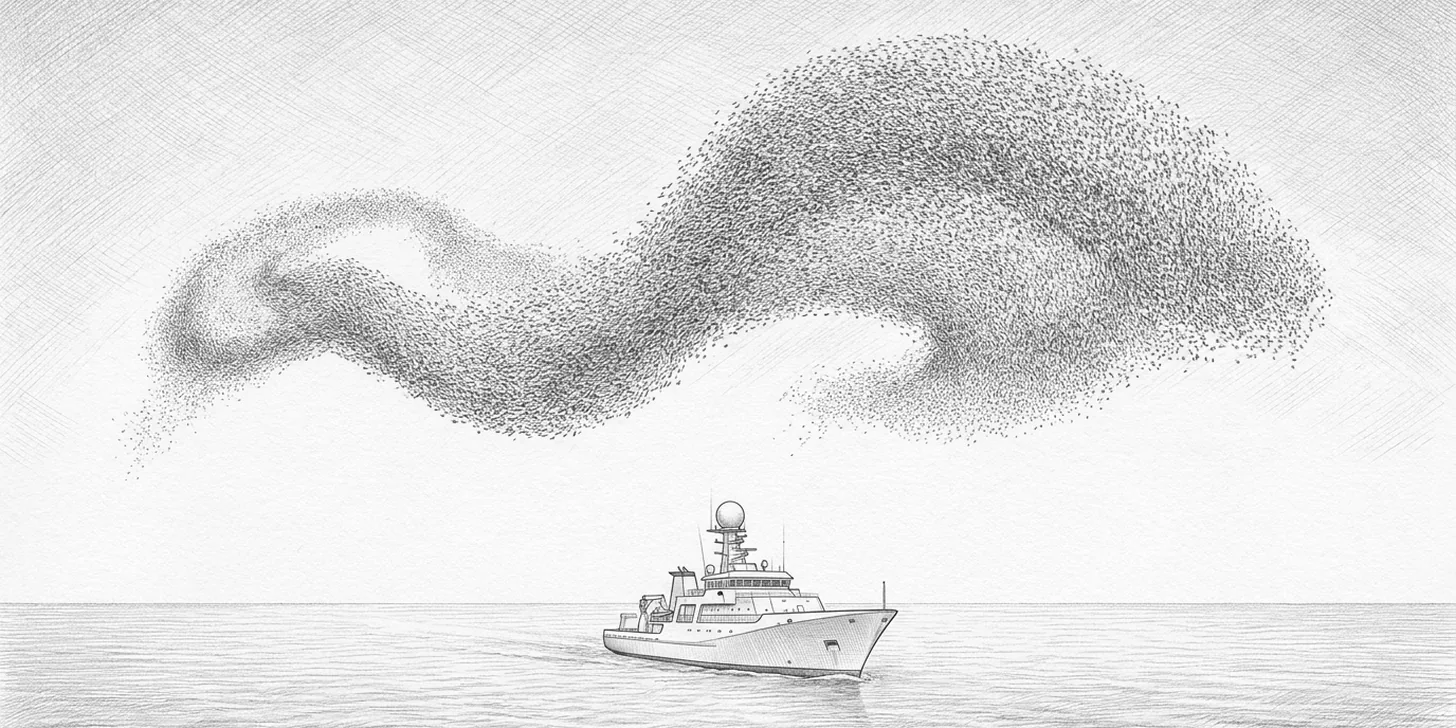
This short video shows “murmurations” in action, when enormous flocks of starlings move together in these almost impossibly coordinated formations.
What’s fascinating is that there is no leader directing the flock. No master flight plan. No starling CEO telling 750,000 other birds where to turn next. Instead, each bird responds to seven of its nearby neighbors.
The basic rules are remarkably simple:
- Avoid collisions: Adjust quickly when you’re getting too close.
- Match direction: Pay attention to where those around you are moving.
- Stay connected: If you drift too far from the group, move back toward it.
And from those simple rules emerges something extraordinarily complex.
Better Rules, Not More Control
I think there’s an important lesson here as we build increasingly powerful AI systems.
Complex systems don’t necessarily require more control. They require better rules. We tend to focus a lot on what AI is capable of doing. Maybe we should be spending just as much time thinking about the rules underneath the system:
- What should it avoid?
- What should it align with?
- What should it remain connected to?
And perhaps most importantly, what happens when it begins drifting too far from the values of the larger system it is supposed to serve?
No Single Bird Sees the Whole System
There’s another lesson in the murmuration too: no single bird understands the whole system.
Each one has limited information. But by paying attention, responding quickly, and continuously adjusting to others, the collective becomes capable of something no individual bird could orchestrate.
I might be so bold to say the future probably isn’t humans handing everything over to AI. And it isn’t humans trying to control every move AI makes. It’s humans and AI participating in systems where feedback is constant, boundaries are clear, and intelligence emerges through community interaction.
The intelligence of a system is determined more by the rules that govern how its members behave together than by how smart any one of them is.
The birds have basically taught us that.
🫡
Captain's Log
Never Miss an Update
New posts and AI operations tips, straight to your inbox.