
From Tool to System: How AI Becomes Operational
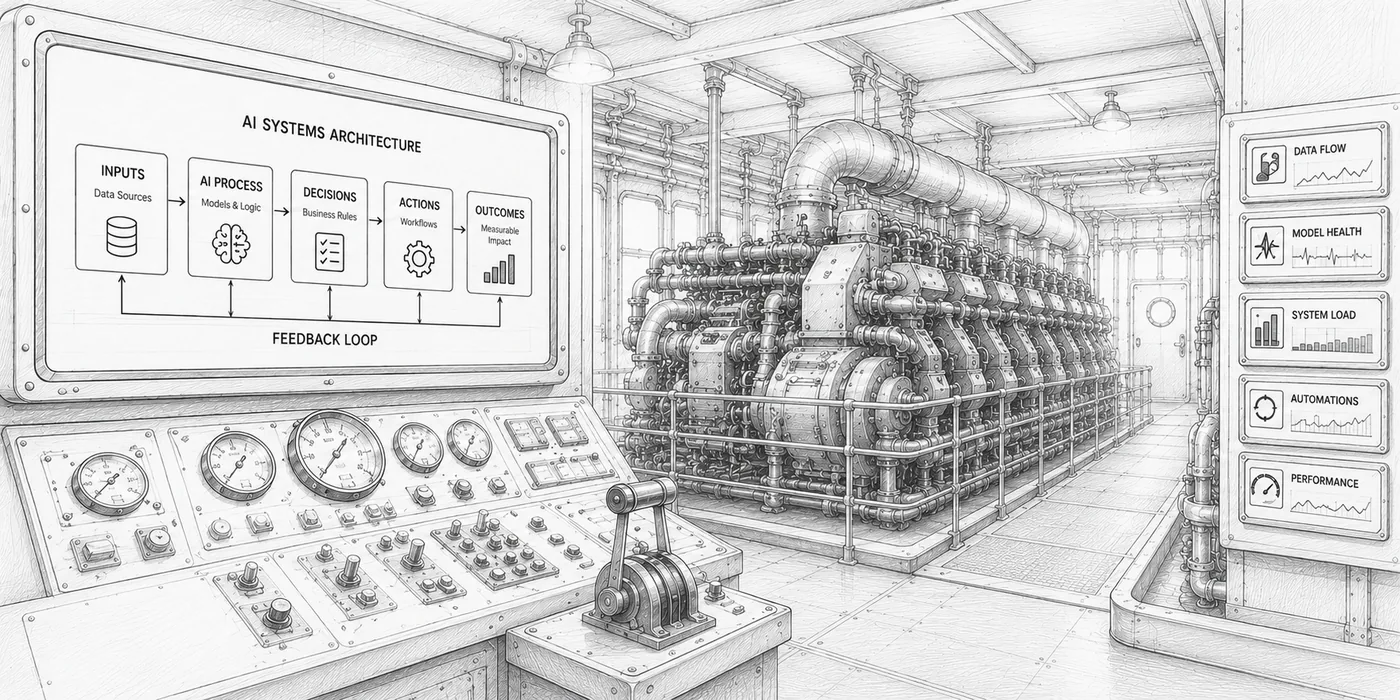
Every business we work with already has AI tools. Almost none of them have AI systems. That distinction is where the value actually lives.
A tool sits and waits to be used. A system runs whether or not anyone remembers to open it. That’s not a subtle difference. It’s the entire ballgame.
Automation isn’t the goal
It’s tempting to think the answer is “more automation.” Automate the email, automate the report, automate the follow-up. But automation without architecture just moves the same broken process faster.
Architecture means deciding, upfront, how information moves through your business: what triggers a workflow, what data it needs, where the output goes, and who’s accountable if it breaks. Get that right and automation becomes a multiplier. Skip it and you’ve just built a faster way to create the wrong output.
What operational AI looks like in practice
Operational AI is boring in the best way. It doesn’t announce itself. It shows up as:
- A weekly report that used to take four hours and now takes four minutes, without anyone opening a new tool to get it.
- A lead that gets qualified and routed the moment it comes in, using the same criteria your best rep would use.
- A customer question that gets answered correctly the first time, using your actual policies and history, not a generic script.
None of that requires a chatbot on your homepage. It requires the AI to be wired directly into the systems your team already relies on: your CRM, your inbox, your project tracker, your data.
The test that matters
Here’s the test we use with every client: if the person responsible for this workflow went on vacation for two weeks, would the system keep working?
If the answer is no, you have a tool. If the answer is yes, you have a system. That’s the bar Mutual Intelligence builds to on every engagement, because a system that depends on one person remembering to run it isn’t actually operational. It’s just automation with extra steps.
The businesses pulling ahead right now aren’t the ones with the most AI tools. They’re the ones who stopped treating AI as software to open and started treating it as infrastructure to run on.
Captain's Log
Never Miss an Update
New posts and AI operations tips, straight to your inbox.